Description
Restore Hormonal Balance Post-Menopause: Guided Estradiol Therapy Online.
What is Estradiol?
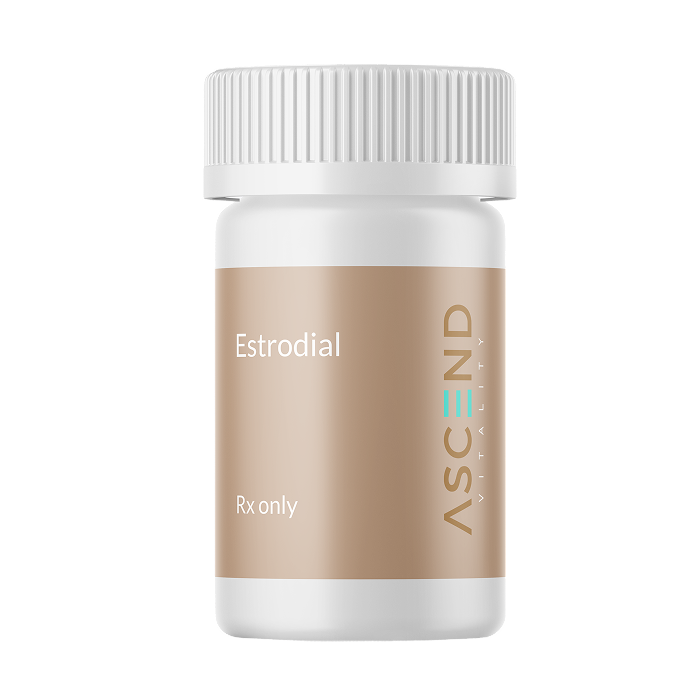
Estradiol is the main type of estrogen hormone naturally produced by a woman’s ovaries before menopause. It plays crucial roles throughout the body, influencing reproductive health, bone strength, temperature regulation, mood, sleep, and skin vitality. Prescription Estradiol, often formulated to be molecularly identical (“bioidentical”) to your body’s own hormone, is used to supplement estrogen levels that decline during and after menopause. It’s available in various forms (e.g., oral tablets, transdermal patches, topical gels/creams, vaginal applications) prescribed based on individual needs and preferences. Access requires an online assessment, potentially lab testing, a thorough risk/benefit discussion with a provider, and a prescription.
How Does Estradiol Therapy Work?
By replenishing declining estrogen levels, prescription Estradiol works to alleviate symptoms directly caused by estrogen deficiency:
- Vasomotor Symptoms: Helps stabilize the body’s temperature control system, significantly reducing the frequency and severity of hot flashes and night sweats.
- Vulvar & Vaginal Atrophy: Restores moisture, elasticity, and thickness to vaginal tissues, relieving dryness, itching, burning, and pain during intercourse.
- Bone Loss Prevention: Slows down the accelerated bone density loss that occurs after menopause, helping to prevent osteoporosis.
What Can Prescription Estradiol Do For You? (Potential Benefits Balanced with Risks)
For women experiencing moderate to severe symptoms who are appropriate candidates, Estradiol therapy, prescribed and monitored carefully, can offer:
- Significant Relief: Provides effective reduction in bothersome hot flashes and night sweats.
- Improved Vaginal Health: Alleviates dryness and discomfort, restoring sexual comfort.
- Bone Protection: Helps maintain bone density and reduce fracture risk (considered especially if other osteoporosis treatments aren’t suitable).
- Enhanced Quality of Life: By relieving disruptive symptoms, potentially improving sleep, mood, and overall well-being.
Crucial Consideration: These potential benefits must be weighed against the serious potential risks outlined in the Safety Information section below. The goal is always the lowest effective dose for the shortest appropriate duration.
Who Could Benefit? (Requires Careful Provider Evaluation)
Prescription Estradiol therapy is primarily considered for women who:
- Are experiencing moderate to severe hot flashes and/or night sweats related to menopause that negatively impact their life.
- Have moderate to severe symptoms of vulvar and vaginal atrophy causing discomfort or painful intercourse.
- Are at significant risk for developing osteoporosis post-menopause and cannot tolerate or are unsuitable for other preventive treatments.
- Have undergone surgical menopause (removal of ovaries) or have primary ovarian insufficiency causing premature estrogen deficiency.
!!! IMPORTANT: Women with an intact uterus taking systemic Estradiol MUST also take a progestogen (like Progesterone) to protect the uterine lining against the risk of endometrial cancer. This is mandatory and will be assessed by your provider. !!!
Suitability requires a comprehensive evaluation of your symptoms, personal and family medical history, and a detailed discussion about risks vs. benefits with a licensed U.S. Partner Provider via the Ascend Vitality platform.
Use Cases & Scenarios: Managing the Menopause Transition
- Controlling Severe Hot Flashes: Seeking reliable relief to improve daily function and sleep quality.
- Treating Vaginal Discomfort: Addressing dryness and pain to restore comfort and intimacy.
- Preventing Osteoporosis: As a medically indicated option for bone health after menopause.
- Comprehensive HRT/BHRT: Utilizing Estradiol (usually with Progesterone) within a personalized, medically supervised hormone therapy plan.
The Ascend Vitality Advantage: Informed & Guided Hormone Therapy Access
Ascend Vitality provides a structured, safety-focused pathway:
- Complete Your Women’s Health / Hormone Visit: Provide thorough details via our secure online questionnaire covering symptoms, health history, family history, and lifestyle factors.
- Potential Lab Coordination: Hormone testing may be facilitated if clinically indicated.
- In-Depth Provider Consultation & Risk Assessment: A U.S.-licensed Partner Provider reviews your entire profile, conducts a virtual consultation to explicitly discuss the significant risks (including Boxed Warnings) and potential benefits of Estradiol therapy in your specific situation, discusses the need for Progesterone (if applicable), and determines appropriateness.
- Personalized Prescription & Discreet Delivery: If Estradiol (+/- Progesterone) is prescribed, the provider selects the lowest effective dose and appropriate form. Medication is shipped directly from a licensed U.S. Partner Pharmacy.
(!!!) CRITICAL SAFETY INFORMATION & BOXED WARNINGS !!!
BOXED WARNINGS: ENDOMETRIAL CANCER, CARDIOVASCULAR DISORDERS, DEMENTIA, and BREAST CANCER
- Endometrial Cancer: Using Estrogen-Alone therapy increases the risk of cancer of the uterus lining (endometrial cancer) in women with a uterus. Adding a progestogen (like Progesterone) to estrogen therapy significantly reduces this risk. Discuss this critical point with your provider.
- Cardiovascular Disorders: Estrogen therapy (with or without progestins) should not be used for the prevention of cardiovascular disease. Studies have shown an increased risk of stroke, deep vein thrombosis (DVT, blood clots in legs), and pulmonary embolism (PE, blood clots in lungs) in postmenopausal women using certain hormone therapies.
- Dementia: Estrogen-alone and estrogen plus progestin therapies have been shown to increase the risk of probable dementia in postmenopausal women aged 65 years or older.
- Breast Cancer: Estrogen plus progestin therapy has been shown to increase the risk of invasive breast cancer. The risk associated with estrogen-alone therapy is complex; discuss your personal risk with your provider.
General Principles:
- HRT should be used only for managing moderate to severe menopause symptoms or preventing osteoporosis when appropriate.
- Use the lowest effective dose for the shortest duration consistent with your treatment goals and individual risks.
- Re-evaluate the need for therapy periodically (e.g., annually) with your provider.
Contraindications: Do NOT use Estradiol therapy if you have: undiagnosed abnormal genital bleeding; known, suspected, or history of breast cancer (discuss specific history); known or suspected estrogen-dependent tumor; active or past DVT/PE; active or recent stroke or heart attack; severe liver disease; known allergy to Estradiol products; known protein C, S, or antithrombin deficiency or other known thrombophilic disorders.
Common Side Effects: May include breast tenderness/pain, headache, nausea, abdominal cramps/bloating, weight changes, vaginal bleeding or spotting, fluid retention, mood changes.
Monitoring: Regular medical check-ups are essential, including annual breast exams, mammograms as recommended by guidelines, and pelvic exams. Report any unusual vaginal bleeding to your provider immediately.
- This is not an exhaustive list. Discuss your personal and family medical history, ALL potential risks, benefits, and alternative treatment options thoroughly with the reviewing provider.